
Introduction
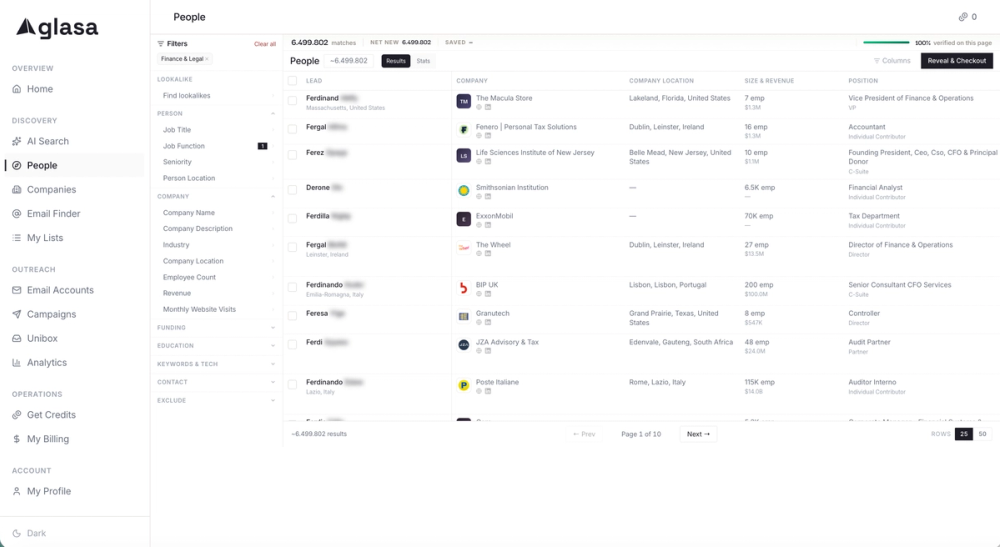
Glasa is presented on its public pages as a sales-focused product with an "AI sales advantage" angle, alongside navigation for features, pricing, free tools, and resources. The fetched material also shows how the brand is categorized alongside cold email, sales intelligence, email verification, data enrichment, LinkedIn automation, and CRM-related tool types. Because the crawl centered on a "featured on" style page, evaluators should confirm core product workflows on Glasa's main marketing surfaces before assuming full feature depth.
Key Features
- Sales and outbound positioning - Headlines and category labels emphasize outbound sales workflows rather than generic productivity software.
- Category alignment - The site groups Glasa near cold email tools, sales intelligence, email verification, data enrichment, LinkedIn automation, and CRM tools in footer-style category lists.
- Free tools and resources - Navigation mentions free tools and resources, suggesting supplementary utilities or content beyond a single paid app.
- Pricing and feature routes - Standard product-site paths for "Why us," Features, and Pricing appear in the visible navigation cluster.
- Public contact signals - List content includes hello@glasa.com and a U.S. phone number for direct outreach.
- Upcoming release messaging - Copy references "Beta 2 dropping soon" and invites visitors to join a list, which may affect what is live today versus planned.
Use Cases
Teams running outbound sales motions may use Glasa if it consolidates research, verification, or automation steps that otherwise span several point tools. The category tags suggest relevance for reps and growth teams who care about list quality, LinkedIn-related workflows, and CRM-adjacent data tasks-though specific workflows should be validated on the product pages.
Founders comparing micro-SaaS sales stacks might look at Glasa when they want AI-assisted positioning in the sales tooling space without committing before reviewing pricing and beta status. The "join the list" message implies some capabilities may still be rolling out.
For evaluators researching vendor credibility, Glasa also publishes a page that lists directories and curated lists where the product has been featured, with badges linking to external sources. That page is useful for traceability, but it is not a substitute for hands-on product evaluation.
Pricing
Navigation includes a Pricing link, but the fetched page did not extract detailed plan names, seat counts, or trial terms. Prospects should open the live pricing section on Glasa's site to confirm whether free tools are truly no-cost, what beta access includes, and whether phone or email sales is required for certain tiers.
User Experience and Support
The public footprint in the crawl is light on documentation depth but includes legal links (Terms of Service, Privacy Policy) and direct contact channels. A testimonials route appears in list content, which may help buyers gauge social proof if those stories are current.
Support expectations should be set through inquiry: the visible phone and email lines suggest human contact is available, but hours, SLAs, and onboarding formats are not described in the extracted evidence.
Technical Details
Fetched content points to integrations and workflows by category (for example LinkedIn automation and CRM tools) without listing APIs, webhooks, or supported CRM names. Teams with strict integration requirements should ask for a technical overview or integration sheet rather than inferring from footer categories alone.
If Glasa is partly in beta, confirm environment stability, data retention, and export options before connecting production sales data.
Pros and Cons
Pros
- Clear sales-tool positioning with category labels that help buyers orient quickly.
- Multiple contact options for questions during evaluation.
- Free tools and resources may lower the cost of trying adjacent utilities before a paid commitment.
- Public "featured on" listings can help verify third-party mentions.
Cons
- Thin descriptive copy on the crawled URL limits feature-level evaluation from a single page.
- Beta messaging means advertised capabilities may change before general availability.
- Integration and compliance details are not spelled out in the fetched material.
- Pricing specifics were not visible in the extracted evidence.
FAQ
What is Glasa based on the public site?
Glasa is framed as a product that activates an "AI sales advantage," with site structure and categories that align it with outbound sales, intelligence, verification, enrichment, LinkedIn automation, and CRM-related tooling.
Who is Glasa likely relevant for?
Sales teams, founders doing outbound, and operators building a micro-SaaS sales stack may find it relevant, provided the live features match their channel mix. Confirm fit against your CRM and compliance needs.
What can visitors verify without signing up?
Visitors can verify navigation to features, pricing, free tools, resources, legal policies, contact details, and external directory badges from the featured-on style content. Depth of each area should be checked on the live site.
Is Glasa fully launched or still in beta?
Visible copy mentions Beta 2 coming soon and encourages joining a list, which suggests parts of the product roadmap may still be in transition. Ask what is available today versus waitlisted.
How do prospects contact Glasa?
The fetched list content shows hello@glasa.com and +1 (415) 738-9206. Confirm current support channels on the contact section of the main site.
What should buyers check before adopting Glasa for production outreach?
Confirm email and LinkedIn compliance posture, integration with your CRM, data sources for enrichment, pricing at your team size, and whether AI-generated outputs meet your review standards.
Conclusion
Glasa presents as an AI-oriented sales tooling brand with outbound-relevant categories and standard product-site paths for features and pricing. Because the crawl emphasized directory badges and high-level navigation, teams should review Glasa's main product pages and speak with the vendor via published contact routes before relying on it in live campaigns.