
Introduction
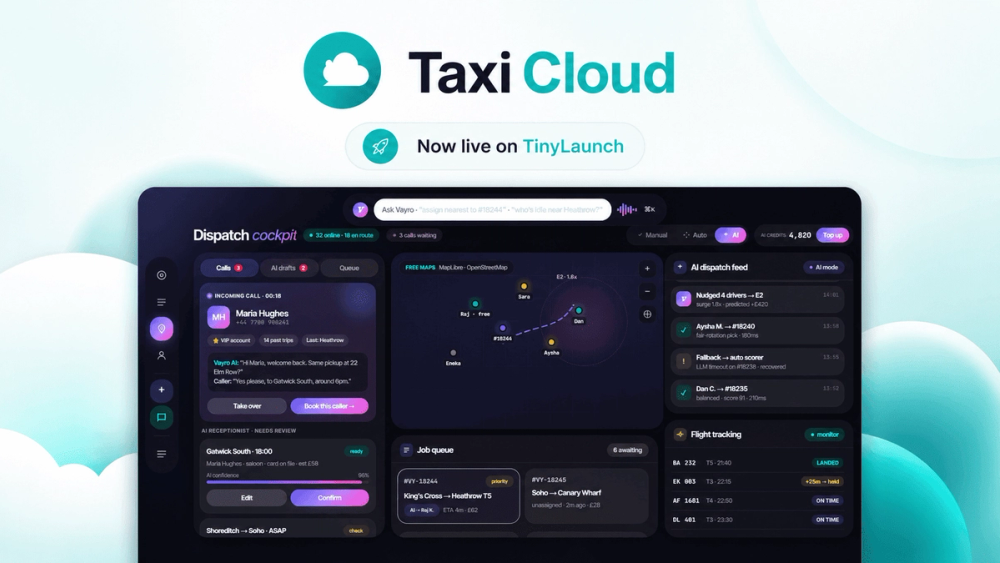
TaxiCloud presents itself as operator-grade taxi dispatch software for UK and Ireland taxi and private-hire fleets, combining bookings, live dispatch, driver and passenger apps, payments, reporting, and an AI Copilot on the dispatch board. The public site publishes tiered monthly pricing and migration messaging for fleets moving off legacy dispatch tools. Fleet operators should verify licensing report coverage, driver limits, and trial terms on the live pricing page before switching production operations.
Key Features
- Bookings - Instant, recurring, and return journeys with an embeddable booking widget for operator websites.
- Live dispatch - Drag-to-assign workflows, push notifications, and control-room-oriented dispatch console copy.
- Driver app - Android-focused app messaging covers GPS, offer/accept flows, in-app chat, ratings, and settlement views.
- Smart pricing - Fixed routes, hourly and mileage models, surcharges, promo codes, and airport-tier pricing are listed as modules.
- Payments - Stripe and PayPal appear alongside payment links, recurring invoices, and driver settlement language.
- Reports and compliance - Revenue, driver performance, and export to Excel/PDF are mentioned, plus coverage zones and council-licensing report positioning for UK PHV and NTA Ireland SPSV contexts.
- CMS and multi-tenant options - Branding, templates, and higher-tier white-label or multi-base capabilities are described on marketing pages.
Use Cases
Small solo operators on spreadsheets may start on the entry plan with a handful of drivers, using bookings plus dispatch and Stripe payments before outgrowing driver caps. Growing fleets that run a physical dispatch desk may lean on live dispatch, SLA-style monitoring copy, and priority support on mid-tier plans.
Multi-base or airport-heavy operators are addressed through higher tiers with more drivers, coverage zones, and onboarding manager language. Enterprise-oriented teams are directed to sales conversations for custom integrations, dedicated infrastructure, or on-prem options mentioned on the Ultra tier.
Pricing
TaxiCloud advertises published plans from £49/month (Starter) through £149 (Pro), £249 (Pro Max), and £349 (Pro Ultra), with a 14-day free trial requiring a card but no charge today on marketing copy. Starter and Pro are described as having no setup fee; annual billing mentions a two-month discount. Driver limits scale by tier (for example up to 5, 25, 100, or unlimited on Ultra). Confirm current caps, AI Copilot inclusion, and cancellation rules on the official pricing page before signing up.
User Experience and Support
The site emphasizes a fast trial signup, interactive demo language, and tiered support from email on Starter to priority support on Pro and SLA-oriented onboarding on higher plans. Migration FAQ copy describes white-glove imports of drivers, vehicles, customers, pricing rules, and historic bookings on Pro and above, with typical cutover in about 7-10 business days.
Operators evaluating UX should run the trial dispatch flow and driver app on their own devices; marketing performance figures and review scores on the homepage are self-presented and should not be treated as independent benchmarks.
Technical Details
Public material references Stripe (and PayPal) for payments, FCM push, Reverb broadcasts for live dispatch sync, and an AI Copilot embedded in dispatch operations. Android is explicitly named for the driver app; passenger app and website builder features appear in tier comparisons. Ultra tier copy mentions custom integrations and on-prem options without a public API catalog in the extracted evidence.
Pros and Cons
Pros
- Transparent published pricing rather than quote-only gating, which speeds initial comparison for fleet owners.
- Broad module list spanning bookings through compliance and branding in one platform narrative.
- Migration positioning from named incumbent systems may reduce switching anxiety for teams on iCabbi, Autocab, Cordic, Gazoop, or TaxiCaller-timelines should be confirmed in sales/onboarding.
- UK and Ireland regulatory reporting angles are called out explicitly for operators in those markets.
Cons
- Driver caps and feature gates vary by tier; mis-picking a plan can block growth mid-rollout.
- Some claims (fleet counts, ride volumes, review scores) are marketing metrics on the site, not third-party verification in the crawl.
- Android-first driver app emphasis may matter if your fleet standardizes on iOS-only devices.
- Enterprise and on-prem needs require a sales path rather than self-serve checkout.
FAQ
What is TaxiCloud designed to do?
TaxiCloud is described as an all-in-one dispatch platform for taxi and private-hire fleets, covering bookings, dispatch, apps, payments, reporting, and AI-assisted dispatch workflows.
Which regions does the marketing emphasize?
The site prominently targets UK and Ireland fleets and mentions council-licensing reports for UK PHV authorities and NTA Ireland SPSV in product copy.
How does the free trial work according to the site?
Marketing states a 14-day trial with card capture but no charge today, cancel anytime, on published plans. Confirm whether trial limits differ from paid tiers in the current terms.
Can fleets migrate from other dispatch systems?
FAQ-style copy on the site offers white-glove migration on Pro and above, importing core operational data with a typical 7-10 business day cutover. Scope and downtime should be confirmed in writing.
What payment processors are named publicly?
Stripe and PayPal appear in module descriptions, along with payment links and driver settlement language. Merchant onboarding and fees follow processor rules.
What should operators verify before going live?
Validate driver app fit, pricing rule flexibility for your markets, compliance report outputs for your licensing authority, integration needs, and whether your fleet size matches the plan's driver cap.
Conclusion
TaxiCloud markets a consolidated dispatch stack for UK and Ireland operators with clear plan tiers and trial entry. Fleets should use the trial to test dispatch, driver workflows, and reporting against their licensing requirements, and read pricing carefully before migrating live jobs from an incumbent system.