
Introduction
Launch begin is a product launch discovery site where new tools, startups, and products can be listed, browsed, and upvoted by visitors. The public site presents it as a place for makers who want a structured launch page, category-based discovery, and scheduled visibility rather than a completely private or invite-only launch process.
The clearest value is for founders, indie hackers, and small teams preparing a public product launch and comparing free or paid visibility options. A careful reader should still verify the current launch rules, ranking conditions, and support process before relying on it as a primary acquisition channel.
Key Features
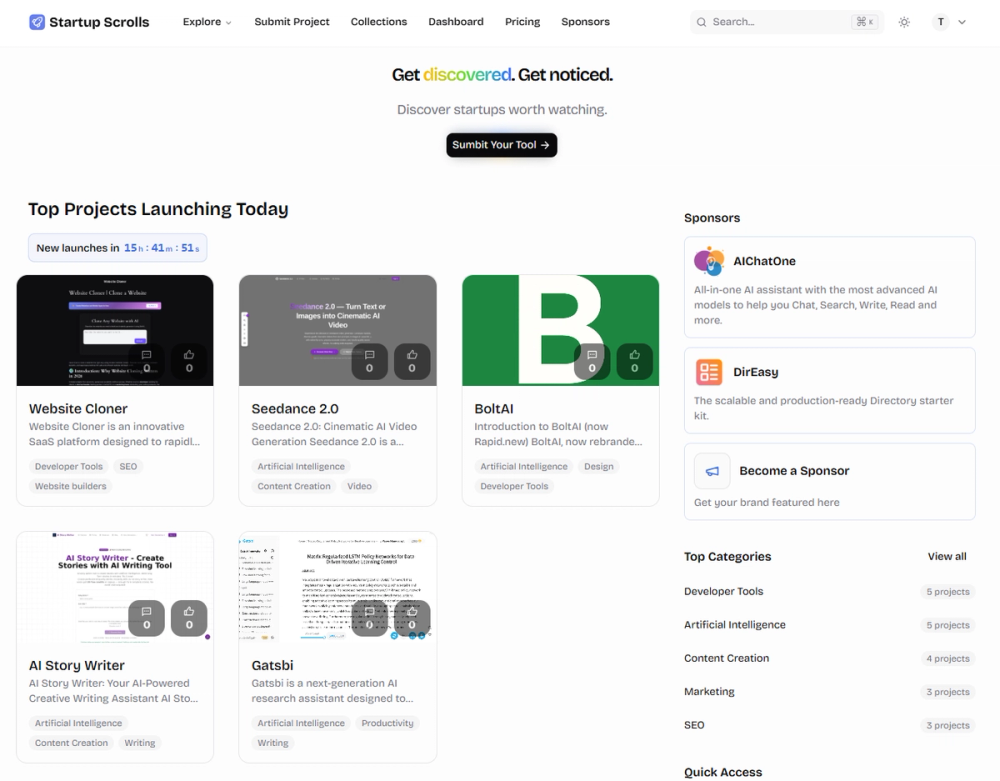
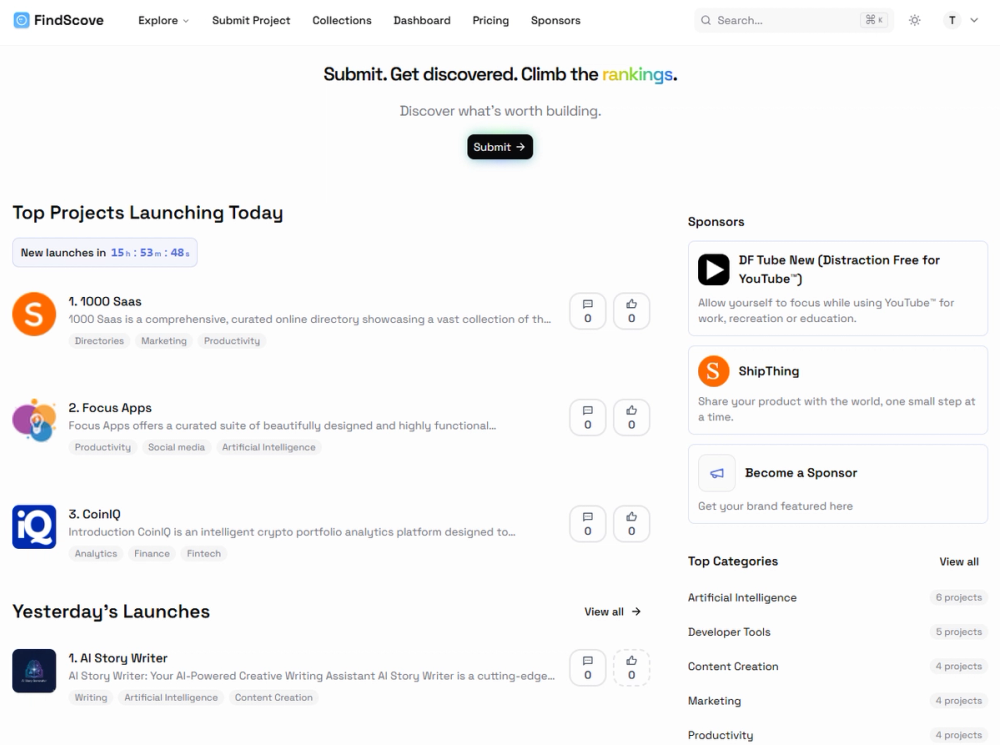
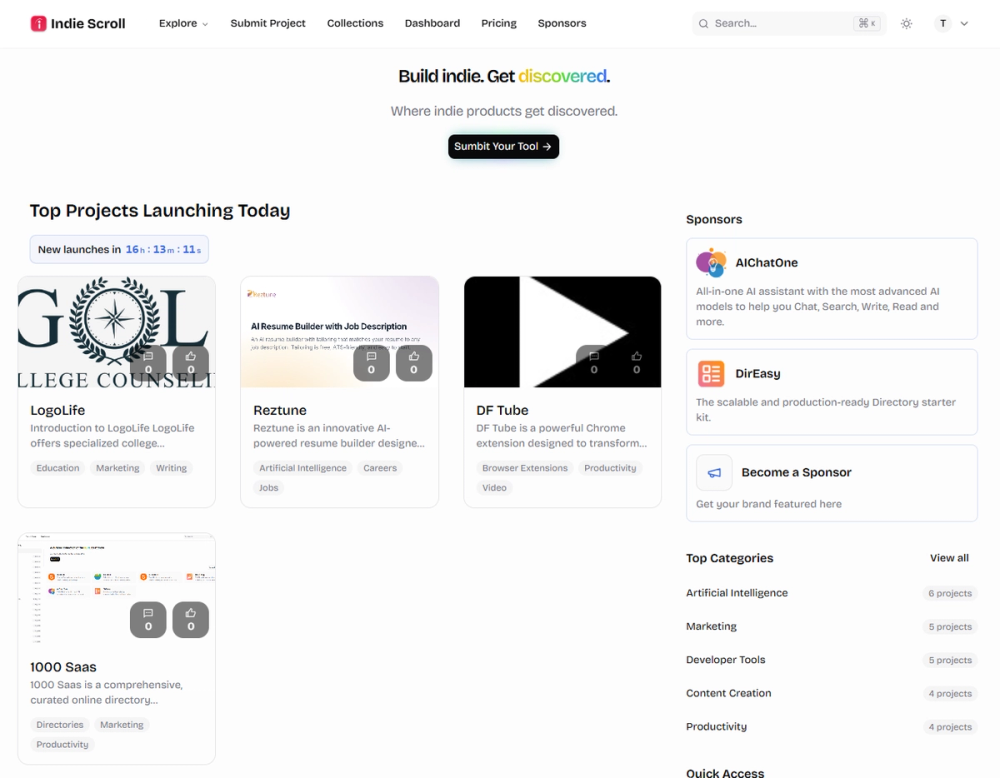
- Daily launch discovery: Launch begin highlights products under areas such as top projects launching today, yesterday's launches, last week's top projects, and last month's top projects.
- Public product submission: The site includes a Submit Project path, which suggests makers can add a project for consideration or launch placement.
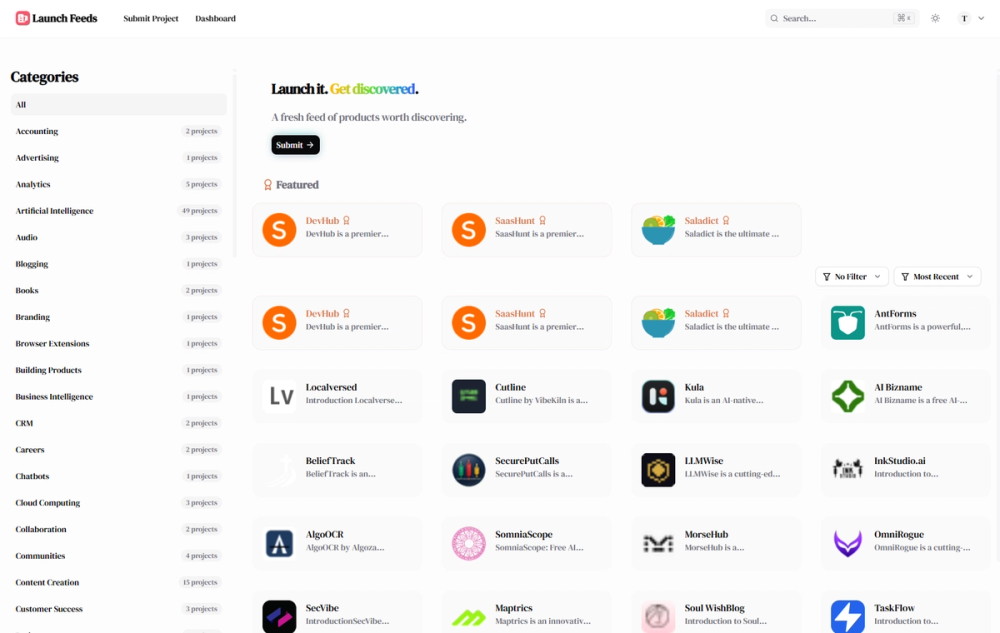
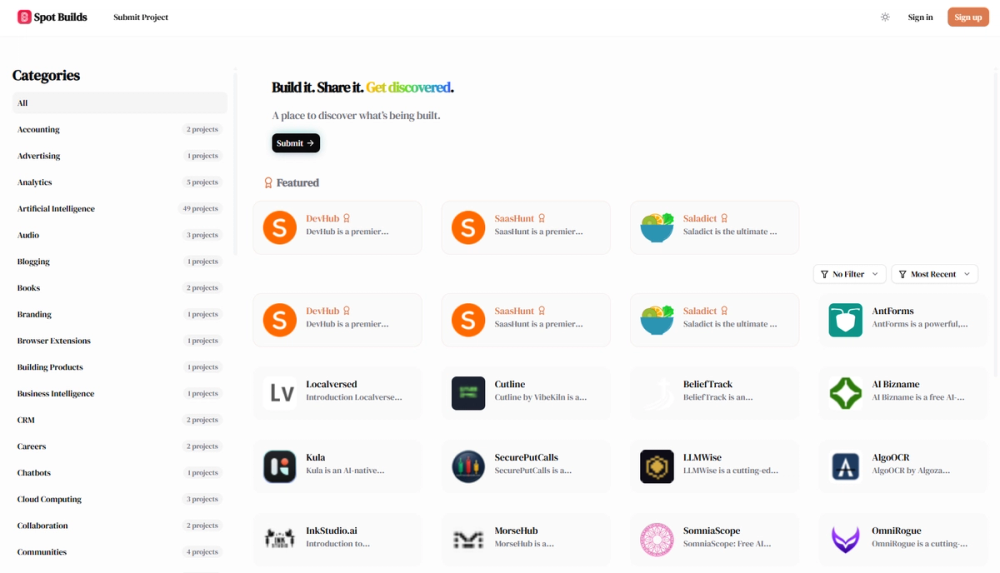
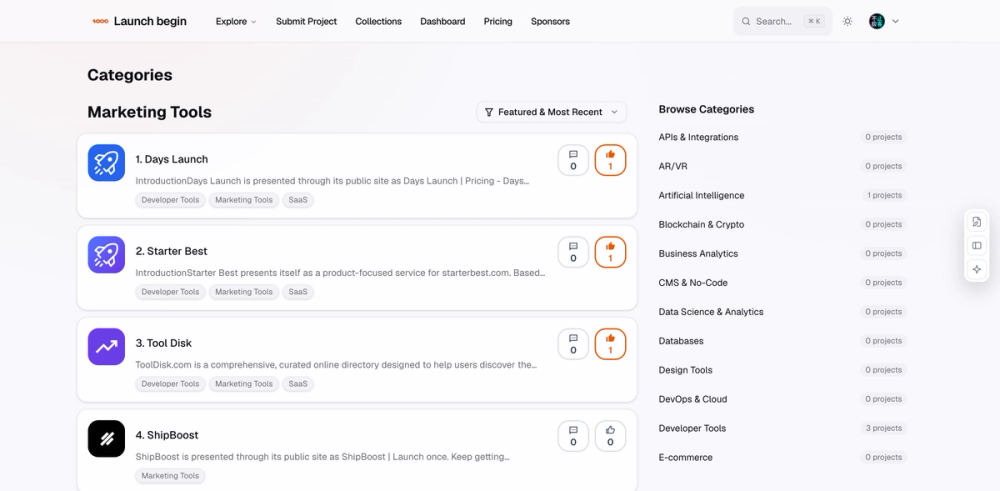
- Category-based browsing: Visible categories include Marketing Tools, Developer Tools, SaaS, Artificial Intelligence, and DevOps & Cloud, helping visitors browse launches by product type.
- Upvote-oriented visibility: The site describes itself as a place to discover and upvote tools, products, and startups launching daily.
- Pricing tiers for launches: The pricing page shows a free launch option, a Premium Launch at $9 per launch, and a Premium Plus offer shown as $12.5 with an early-user discount from $25.
- Sponsor placement: The homepage includes sponsor areas and a "Become a Sponsor" prompt for brands that want additional visibility.
Use Cases
Launch begin is most relevant for makers who want a public launch surface where a product can be displayed alongside other new tools. The site appears designed for lightweight product discovery, with product cards, launch timing, upvotes, and category filters giving visitors a simple way to scan what is new.
It may also be useful for founders who are weighing free launch exposure against paid placement. The pricing copy describes scheduling windows, daily slot limits, priority access, and listing visibility, so teams can compare whether they only need a standard queue or want a more visible paid launch.
For visitors, the site works more like a launch browsing page than a full software marketplace. People looking for new AI tools, SaaS products, developer tools, or marketing products can use the category and time-based sections to see what has recently been listed, although they should still evaluate each product independently before adopting it.
Pricing
Launch begin publishes several launch options. The free launch is listed at $0 per launch and includes a standard launch with up to a 90-day scheduling window and 5 daily slots. The Premium Launch is shown at $9 per launch and describes priority scheduling, 5 premium slots daily, earlier launch dates, and a dofollow backlink claim tied to the plan. Premium Plus is shown as $12.5, discounted from $25 for early users, and the site describes a special homepage spot plus premium styling for 14 days. Readers should check the current Launch begin pricing details before purchase because availability, launch slots, and promotional pricing can change.
User Experience and Support
The public page is organized around discovery sections, visible product cards, categories, sponsor areas, and navigation links such as Submit Project, Collections, Pricing, Sponsors, Sign in, and Sign up. That structure makes the site easy to understand at a glance: visitors browse launches, while makers look for submission or pricing paths.
Support details are less clear from the fetched pages. The site shows account-related navigation and legal links, but a dedicated help center, documentation hub, or contact route was not clearly visible in the available evidence. Before paying for a launch, makers should confirm how support works if a submission is delayed, rejected, incorrectly categorized, or needs editing after publication.
Technical Details
Launch begin publicly shows category pages, product-card style listings, time-based launch sections, pricing options, and visible site statistics through an Umami statistics reference. The homepage also displays visits and page views for a recent period, which gives readers some context about public site activity, although those numbers should not be treated as a promise of launch performance.
The available evidence does not show an API, integrations, SDKs, automation workflow, or detailed publishing backend. For most users, the practical technical question is less about integration and more about submission requirements, scheduling behavior, account access, ranking rules, and whether listings can include the assets and links a launch team needs.
Pros and Cons
Pros
- Clear launch positioning for tools, startups, and new products.
- Public pricing page with free and paid launch options.
- Category browsing supports discovery across SaaS, developer tools, AI, marketing, and related product types.
- Time-based sections make it easy to understand what is launching today and what performed recently.
- Sponsor and premium placement options may suit teams that want more prominent visibility.
Cons
- Support and documentation details are not clearly visible from the public pages reviewed.
- Paid visibility terms, ranking conditions, and backlink rules should be checked carefully before relying on them.
- The site appears discovery-oriented, so it should not be treated as a guaranteed customer acquisition channel.
- Some page text is repetitive in the fetched evidence, which can make it harder to separate navigation, sponsor items, and core product details.
- Technical integration details are not prominent, so teams needing automated launch workflows may need to ask before committing.
FAQ
What is Launch begin used for?
Launch begin is used to discover, list, and upvote new tools, products, and startups. Its public pages focus on daily launches, product cards, categories, launch scheduling, and pricing options for makers who want visibility during a product launch.
Who is Launch begin best suited for?
It is best suited for founders, indie hackers, startup teams, and makers preparing a public launch for a tool, SaaS product, AI product, developer tool, or marketing product. It is also useful for visitors who want to browse newly launched products by category or time period.
What can makers verify on the Launch begin website?
Makers can verify the homepage positioning, discovery sections, listed categories, sponsor prompts, and launch pricing tiers. The public site also shows details such as free launch scheduling, premium launch pricing, premium slot limits, and Premium Plus visibility language.
How does Launch begin pricing work?
The public pricing page shows a free launch at $0, a Premium Launch at $9 per launch, and a Premium Plus option shown as $12.5 with an early-user discount from $25. Each tier has different visibility and scheduling language, so teams should review the pricing page before choosing a plan.
Does Launch begin guarantee launch results?
The site describes visibility options, launch slots, ranking-related conditions, and product listing placement, but readers should not treat that as a guaranteed traffic or customer outcome. A launch team should verify what each plan includes and use Launch begin as one part of a broader launch strategy.
What should users check before submitting a project?
Users should confirm the current submission rules, category fit, launch date availability, listing requirements, backlink conditions, refund or edit policies, and available support route. This matters because launch timing and placement can affect whether the listing matches the team's expectations.
Does Launch begin show support or documentation details publicly?
The available pages do not clearly show a dedicated help center or documentation area. There are sign-in, sign-up, legal, and product navigation links, but makers should confirm how to contact the team if they need help with a submission, paid placement, or listing correction.
Conclusion
Launch begin is a focused product launch discovery site for makers who want a public place to submit, schedule, and promote a new project. Its strongest visible signals are the daily launch structure, category browsing, upvote-based discovery, and clear free-versus-paid launch options.
For teams considering it, the practical next step is to review the Launch begin homepage and pricing page, then confirm the submission rules and support process before depending on it for an important launch.